

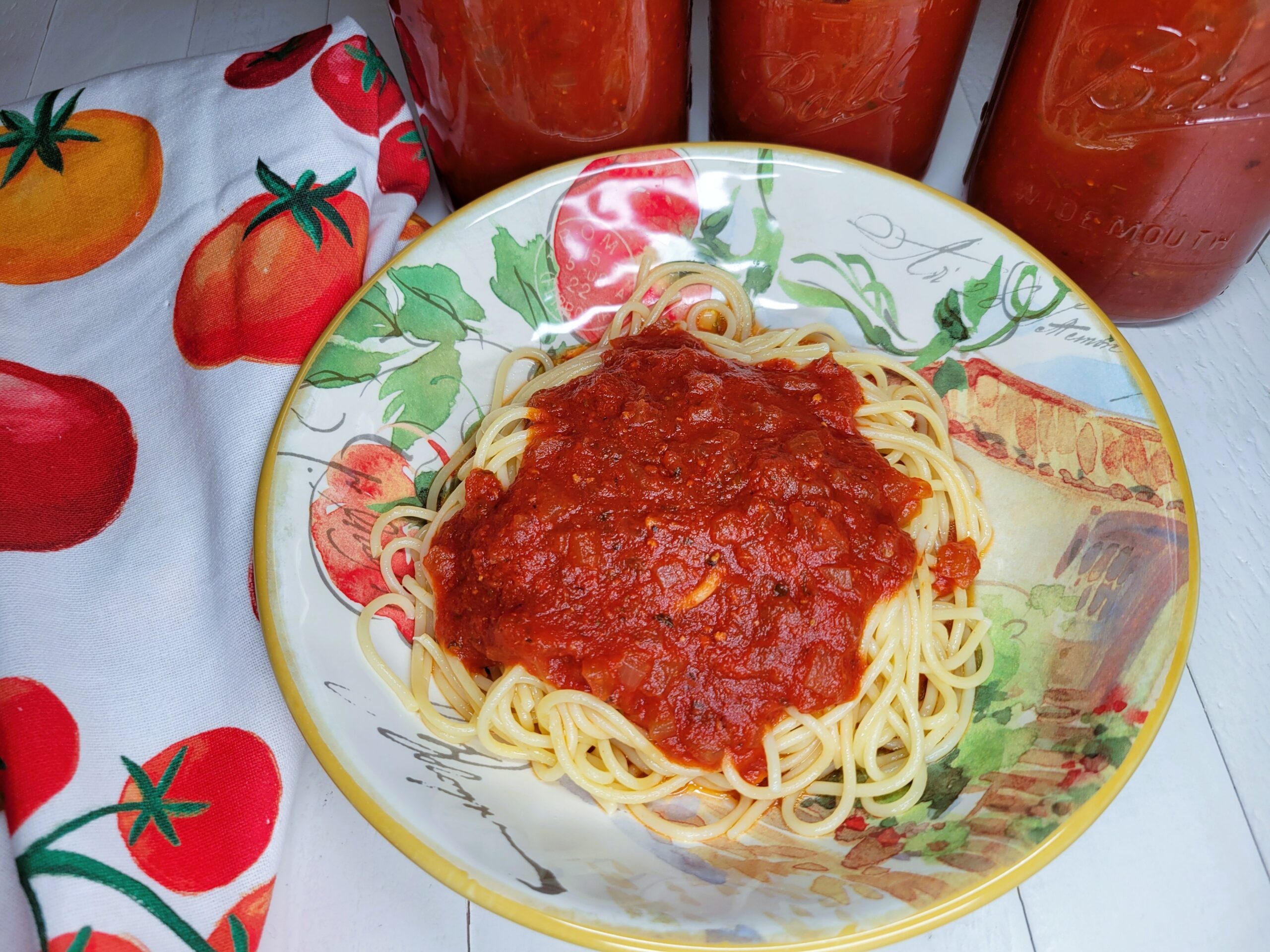
-
Prep Time20 minutes
-
Cook TimeCook time 1 hour plus canning time 70 minutes
-
Serv SizeYield 3 1/2 quarts
Delicious! It pressure cans perfectly and freezes wonderfully. Includes step-by-step instructions with photos🍝
Ingredients
Directions
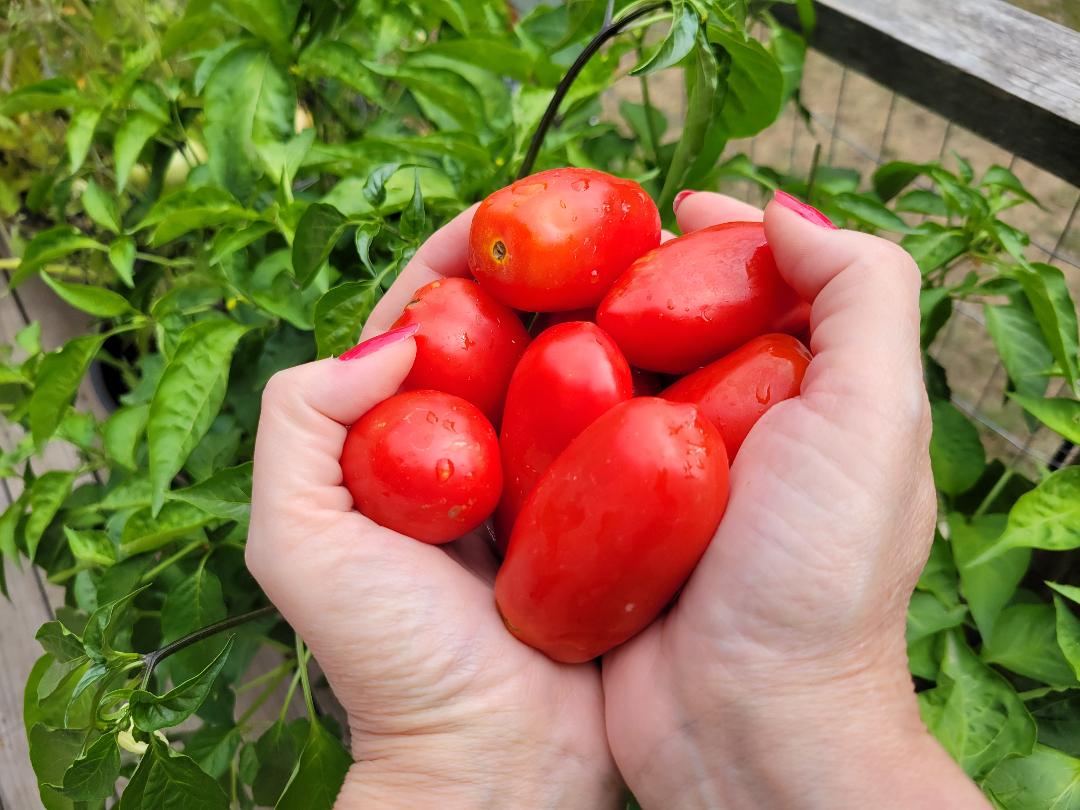
Each year, my husband and I grow San Marzano tomatoes along with around 25 other varieties. One of our favorite ways to use the harvest is canning spaghetti sauces. We also make a scaled-down version of this same sauce here: Spaghetti & Meatballs without the canning process.
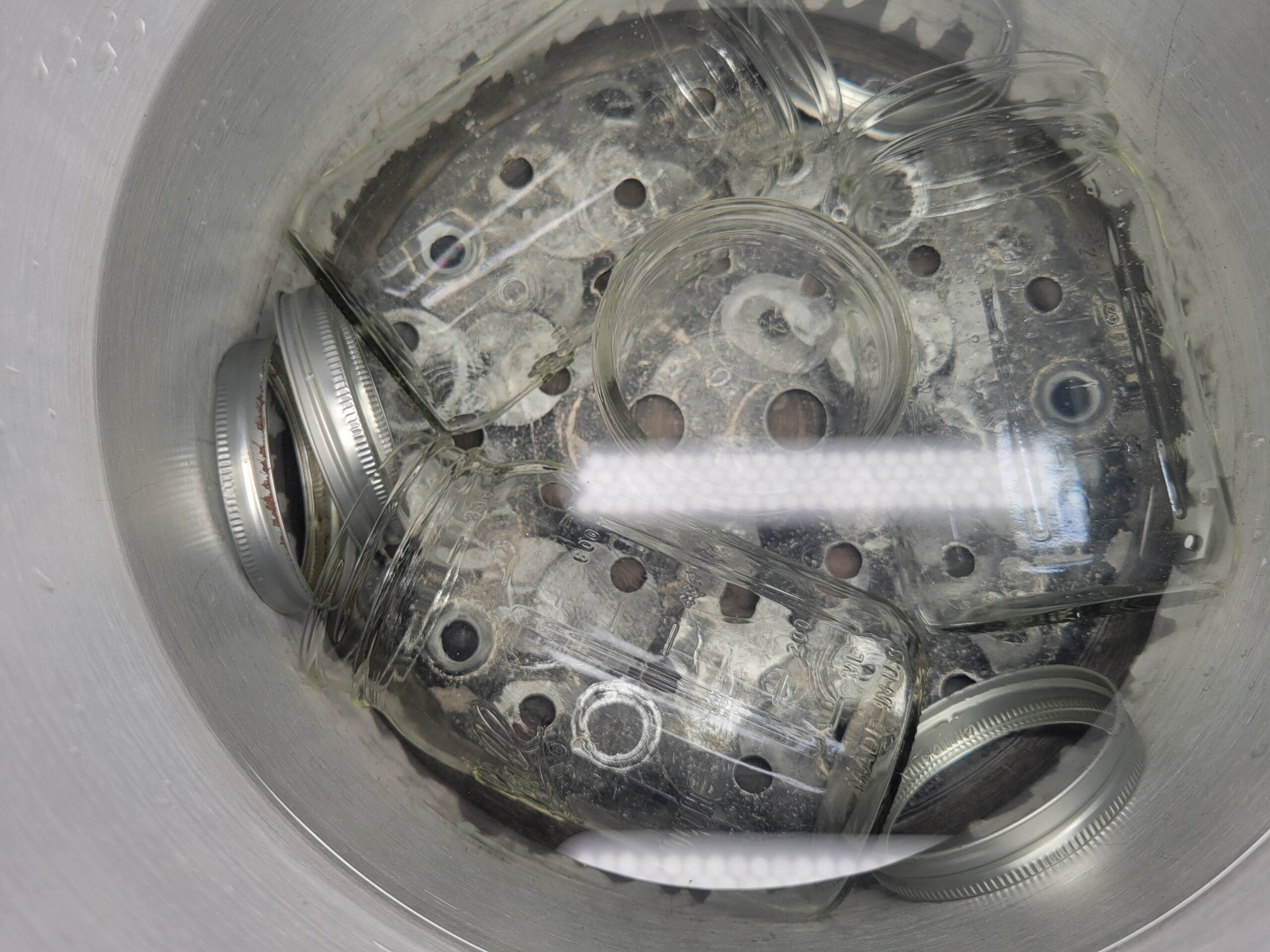
Wash jars 3 quart jars and 1 pint jar, bands, and lids in warm, soapy water. Boil jars and bands for at least 10 minutes before filling them. DO NOT boil lids, as this will compromise their sealing ability.
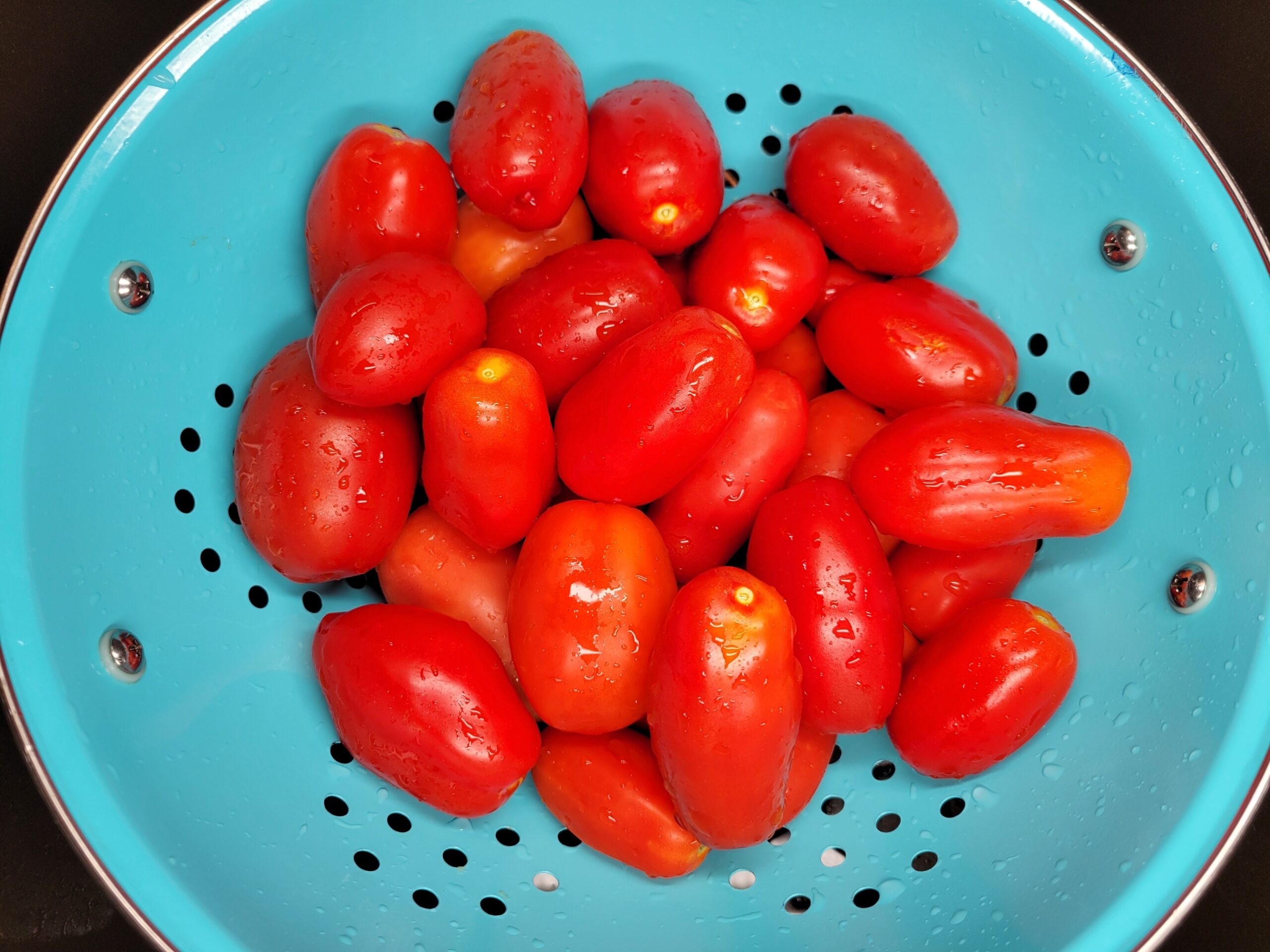
Thoroughly wash the tomatoes, the freshest tomatoes should be used.
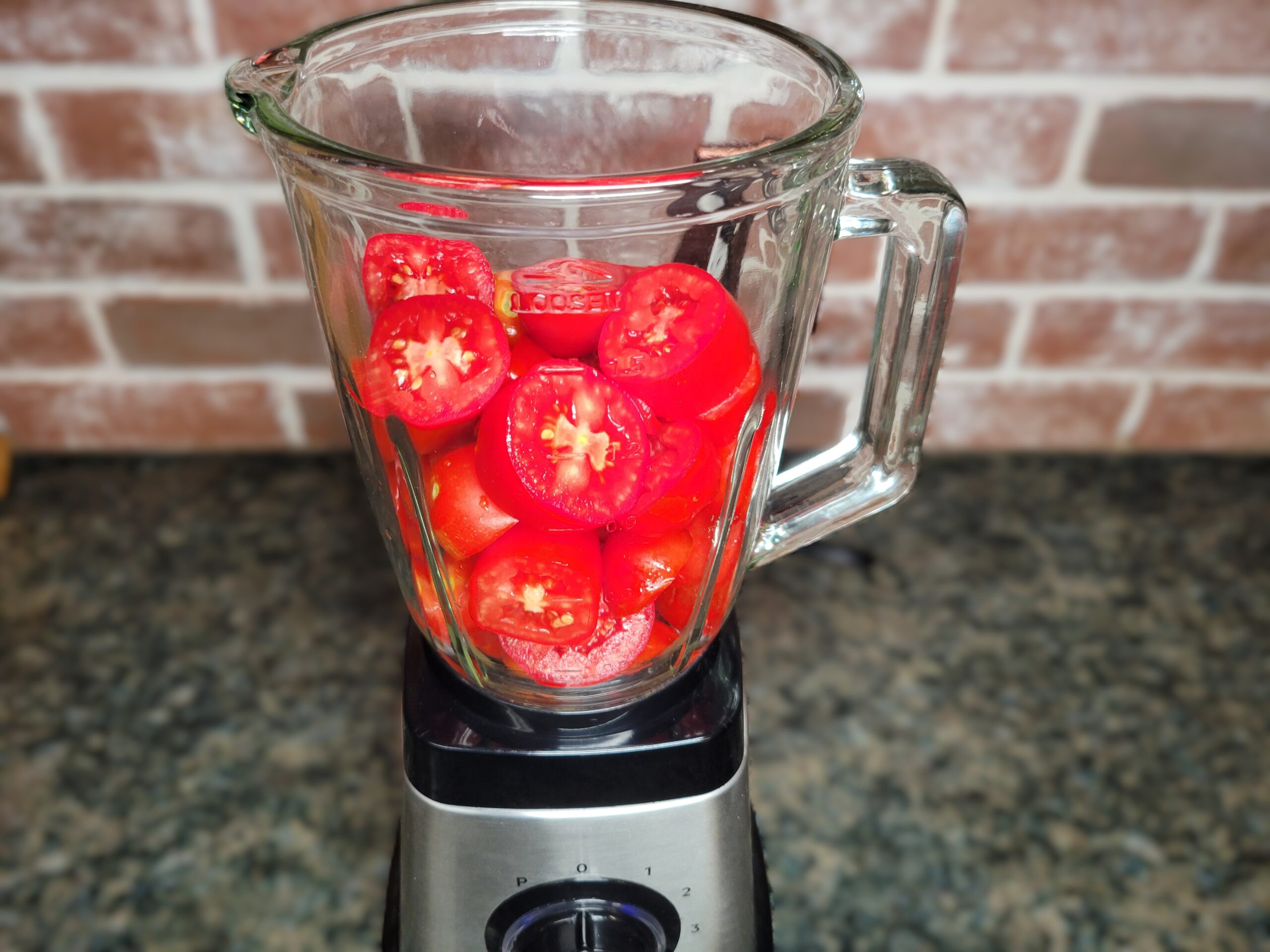
Roughly chop the tomatoes and puree them in a blender until smooth.
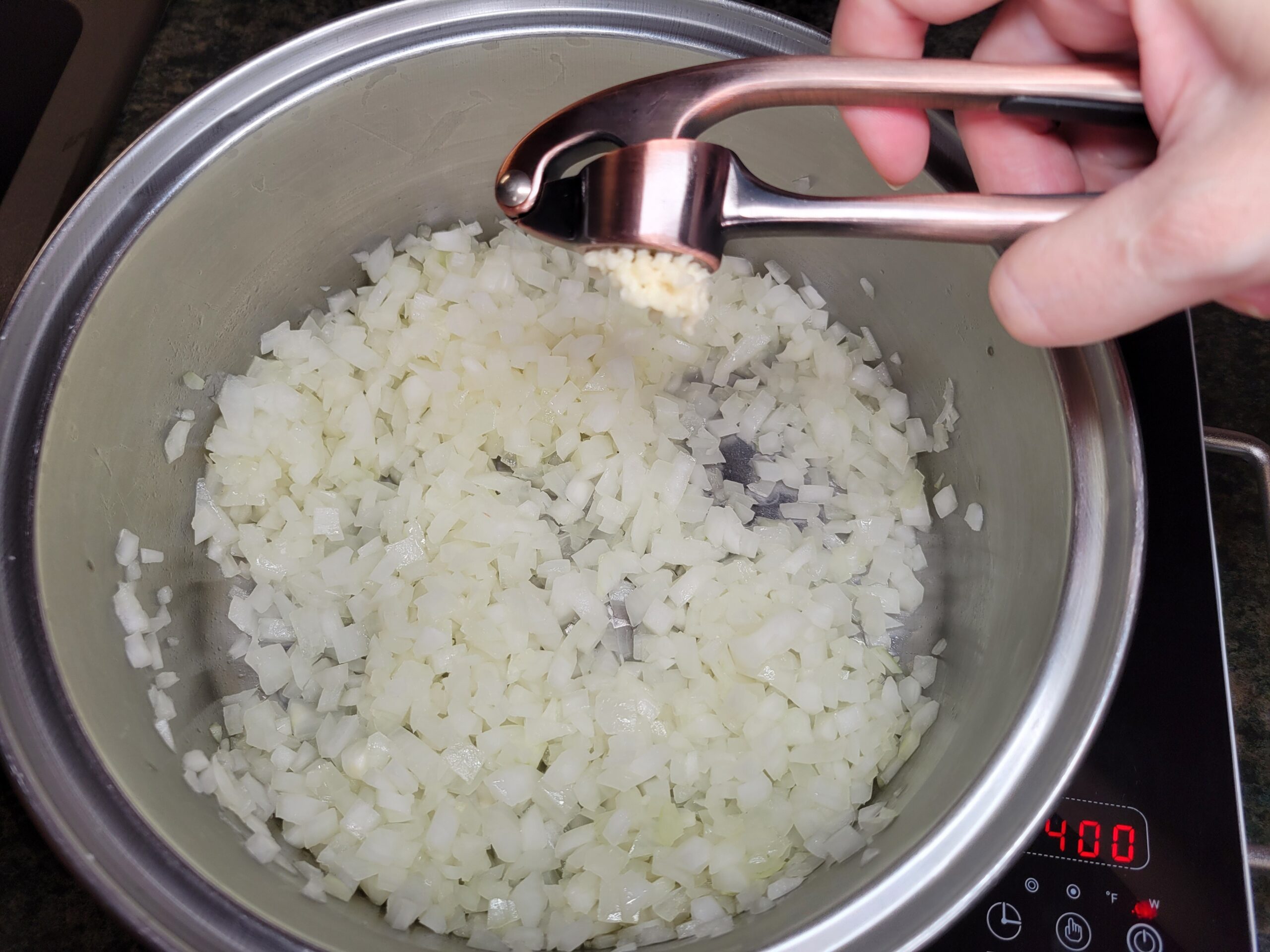
In a large stainless-steel pot (to avoid any metallic taste), sauté onions in 2 tablespoons of olive oil over medium heat. Stir in 2 minced garlic cloves after the onions have softened, and let it cook for another couple of minutes.
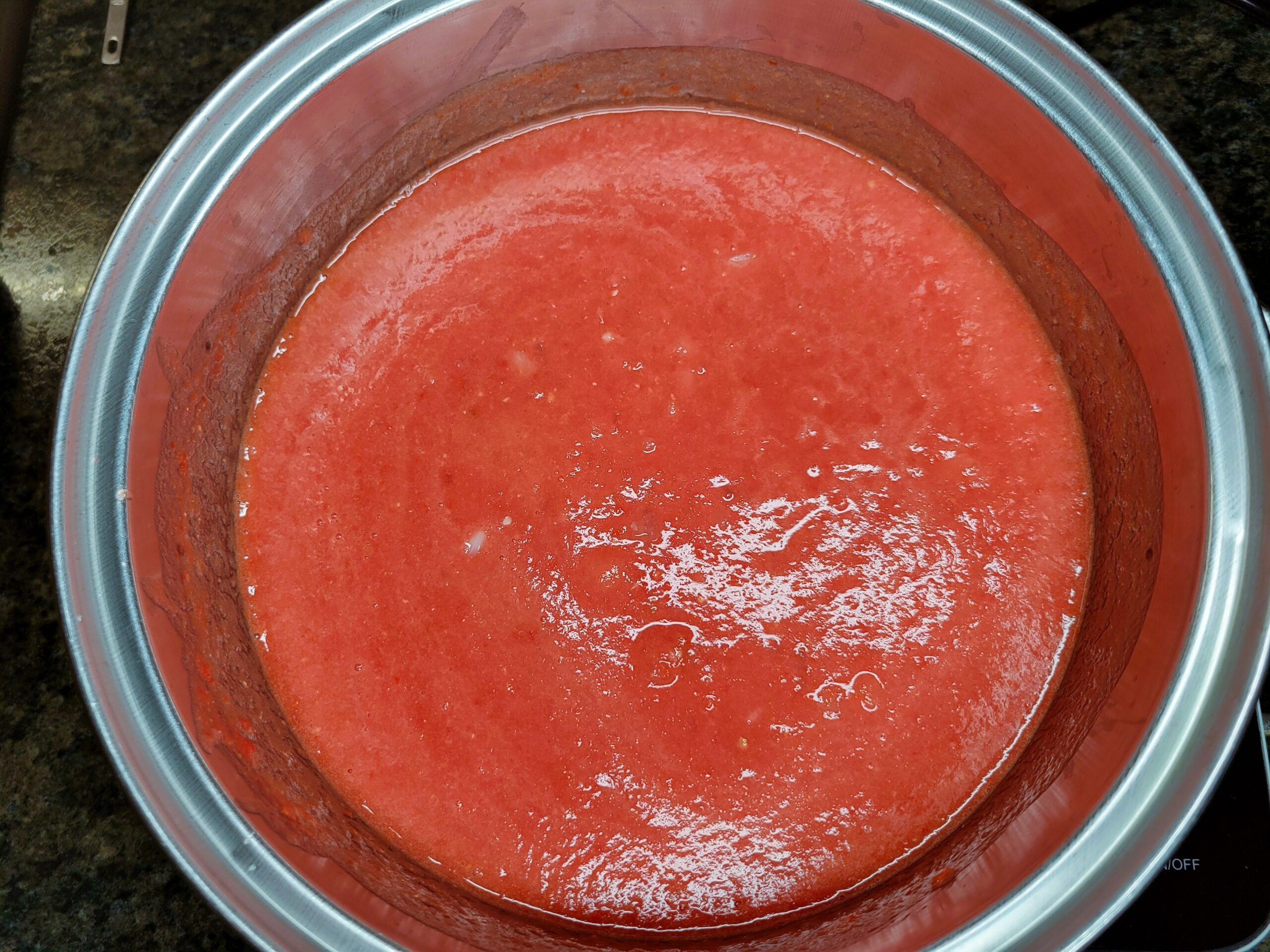
Add 58 ounces of fresh tomato puree to the pot. Bring it to a boil, then reduce the heat and let it simmer for 10 minutes. The tomato puree should develop a deeper, more vibrant shade of red.
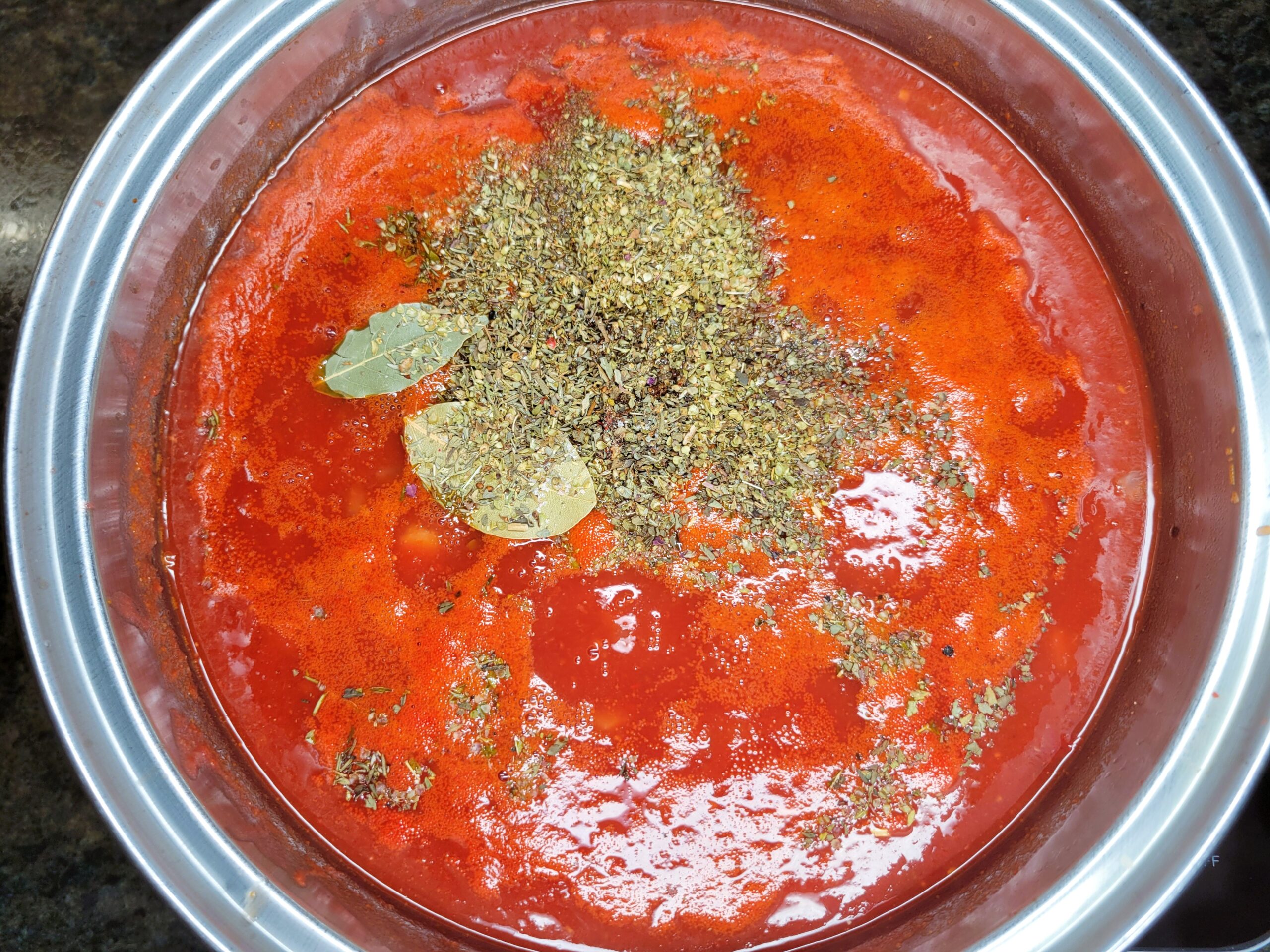
Add 4 cups of beef broth, 12 ounces of tomato paste, 2 tablespoons of brown sugar, 1 teaspoon of dried basil leaves, 1 tablespoon dried oregano leaves and 1/2 teaspoon dried thyme leaves. Salt and pepper to taste. Stir until combined.
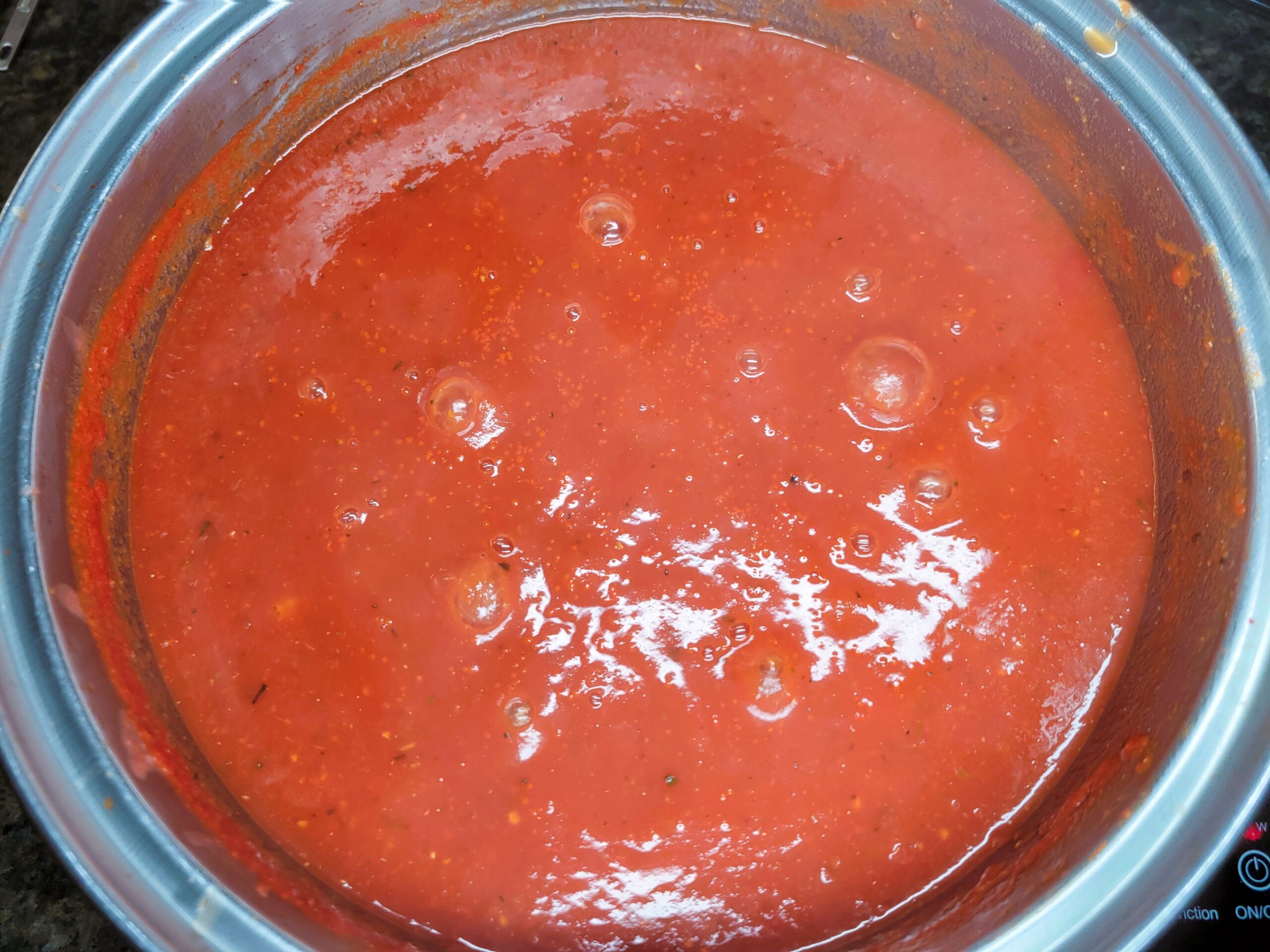
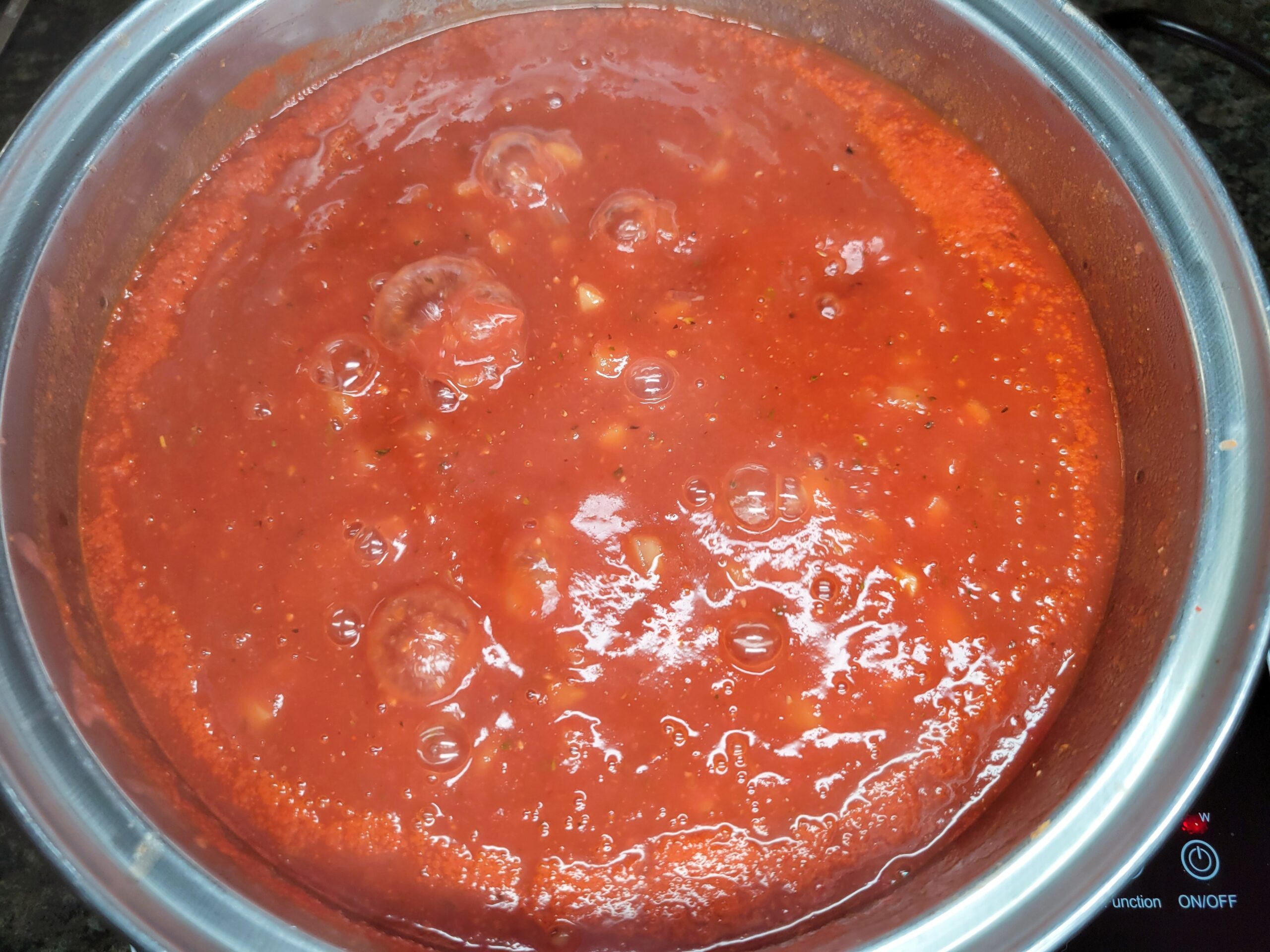
Bring the mixture back to a boil, then reduce the heat and let it simmer. Continue simmering uncovered for 45-60 minutes, or until the sauce has reduced into a rich, thick spaghetti sauce. Be sure to remove the bay leaves just before canning the sauce.
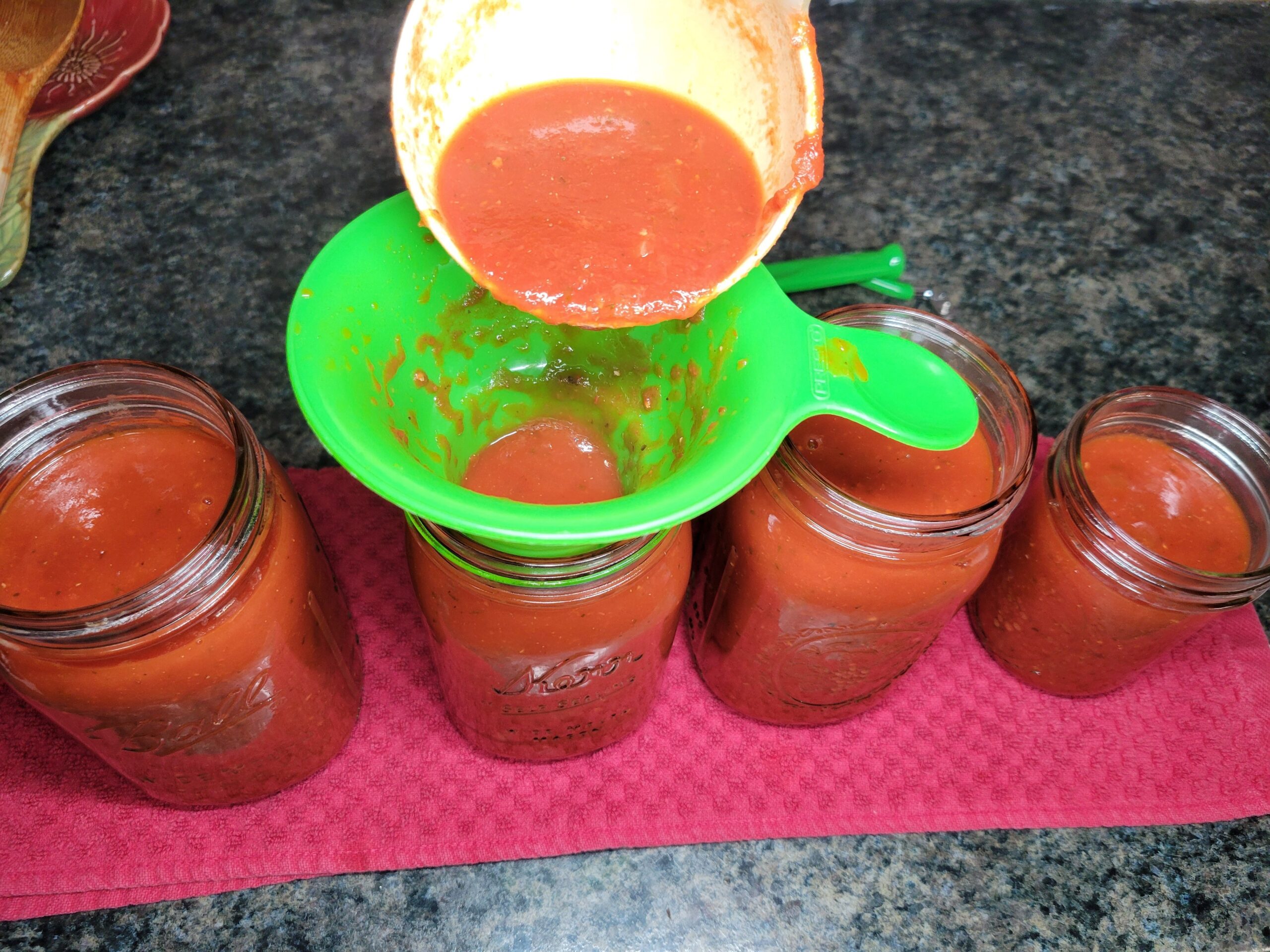
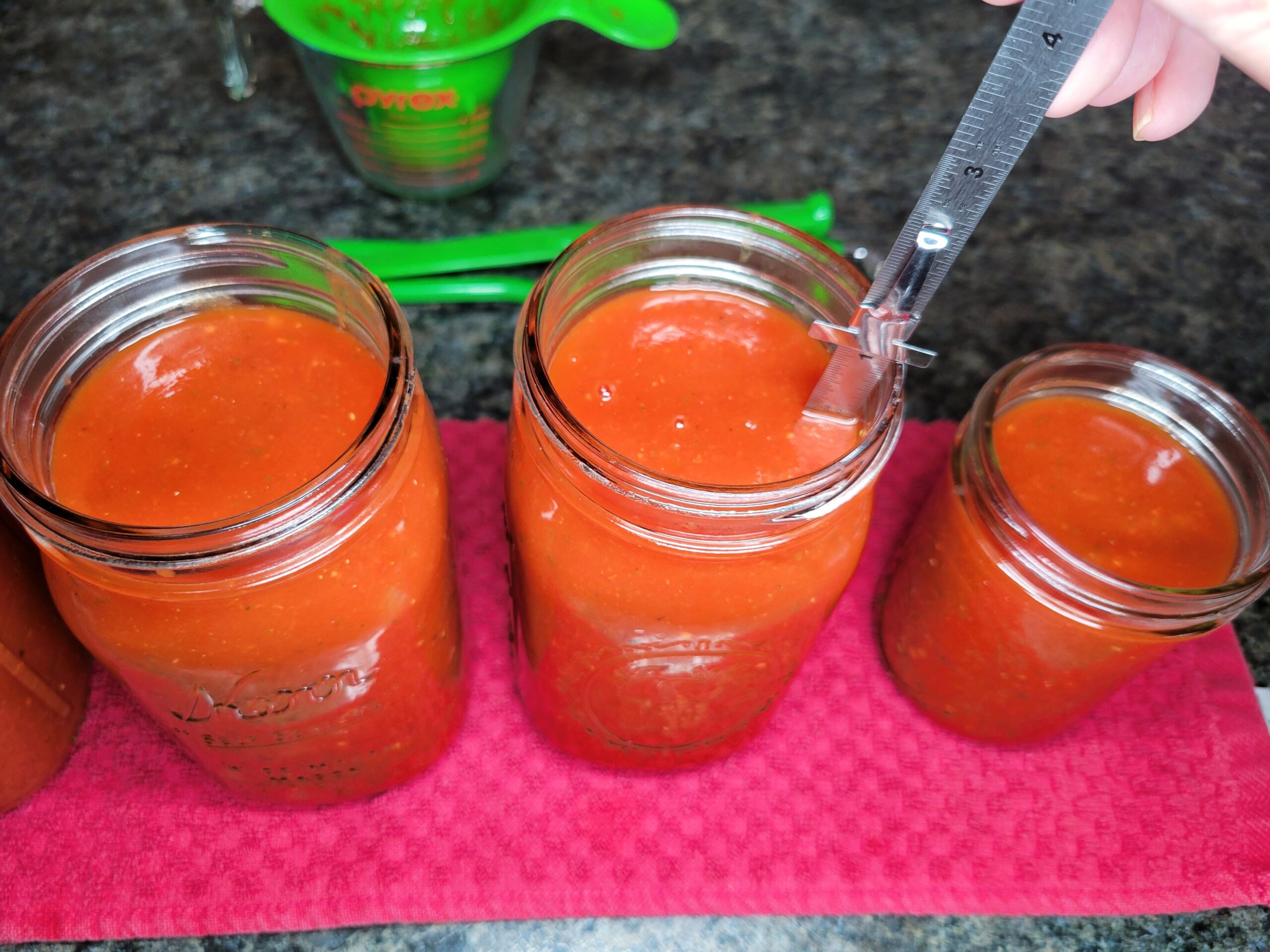
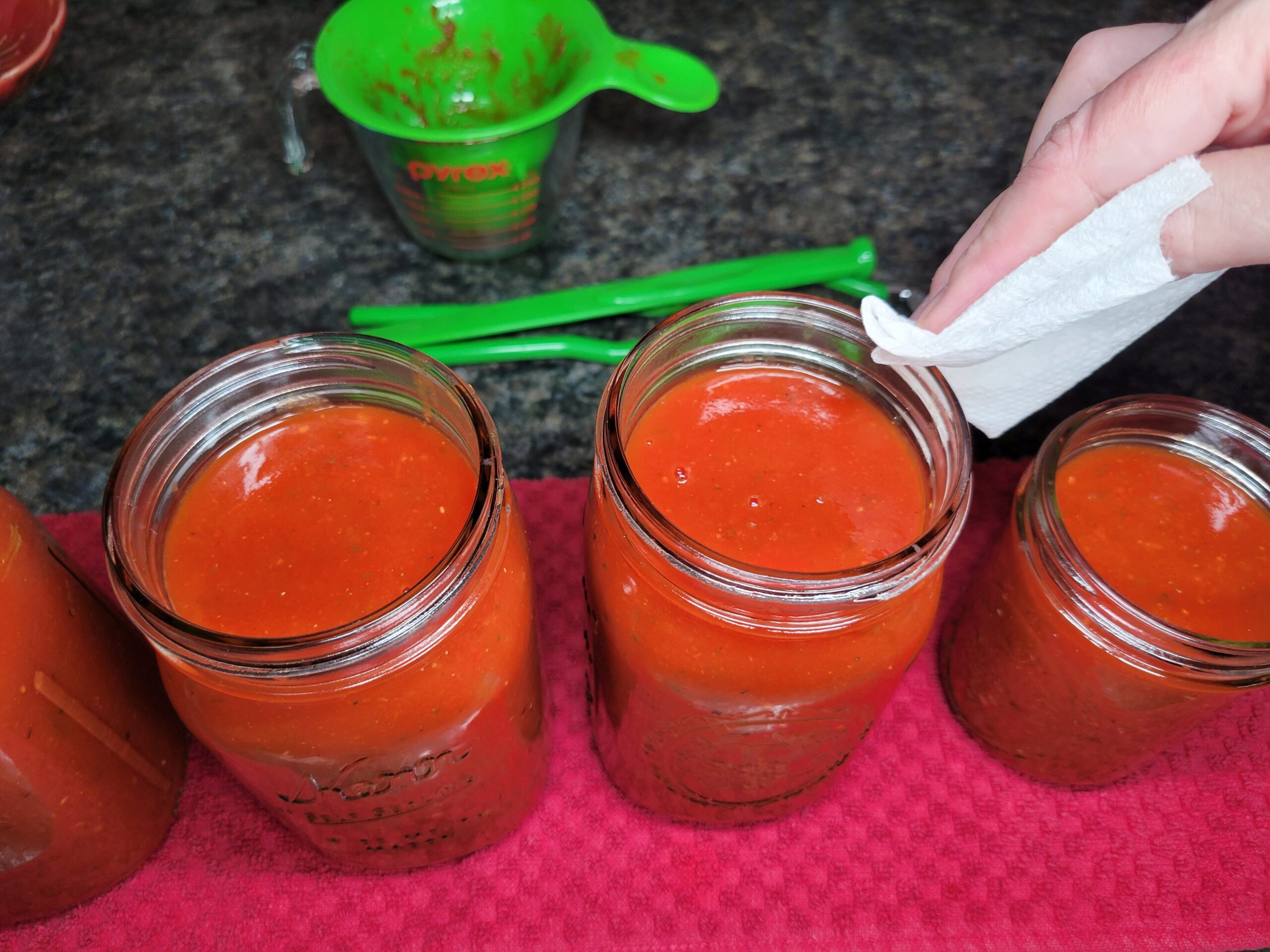
Use a ladle to fill the hot jars with hot spaghetti sauce. Leave 1-inch headspace. Remove any trapped air bubbles with a spatula tool and wipe rims with a damp clean towel.
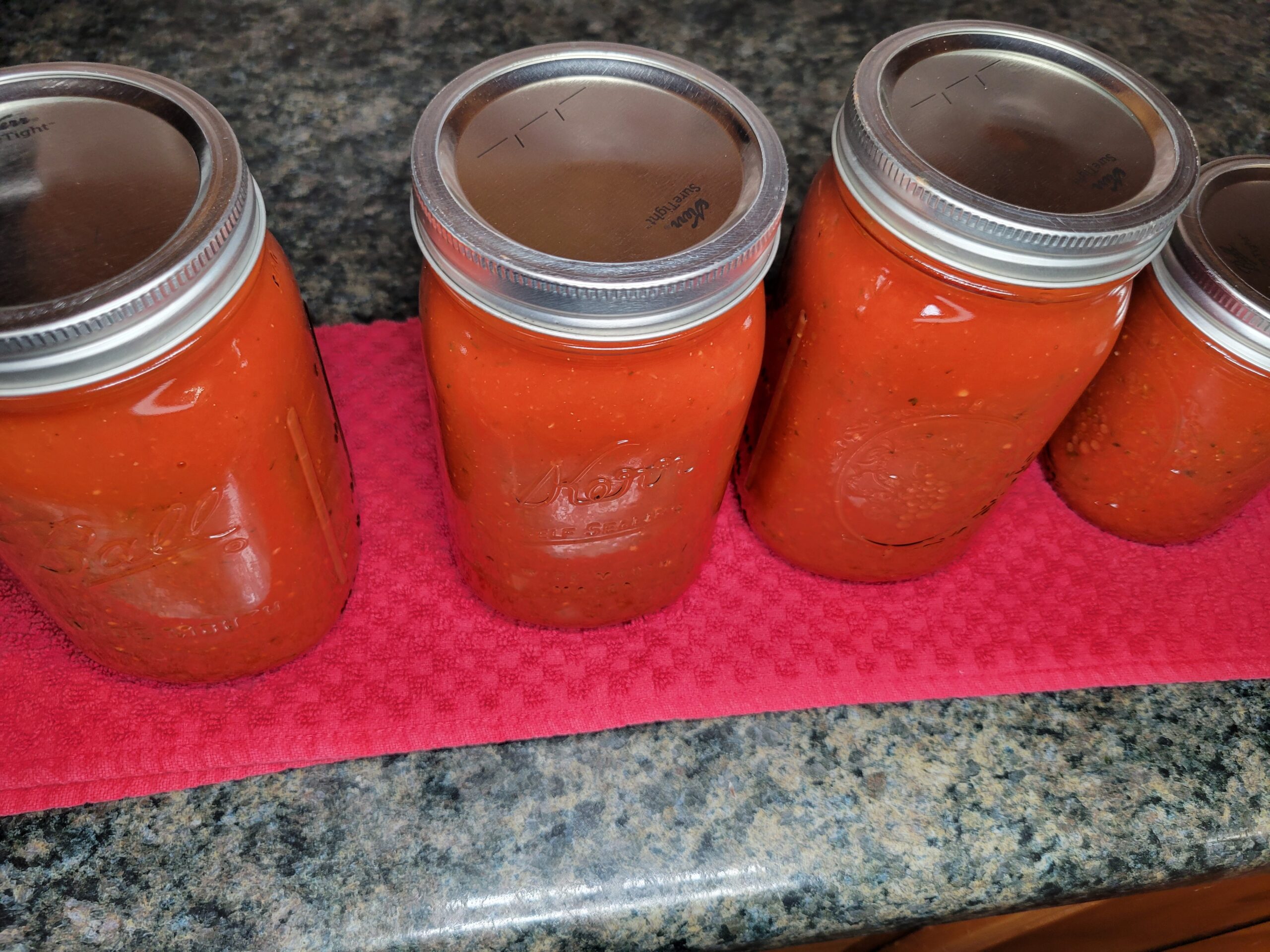
Place lids and bands on the jars and finger tighten.
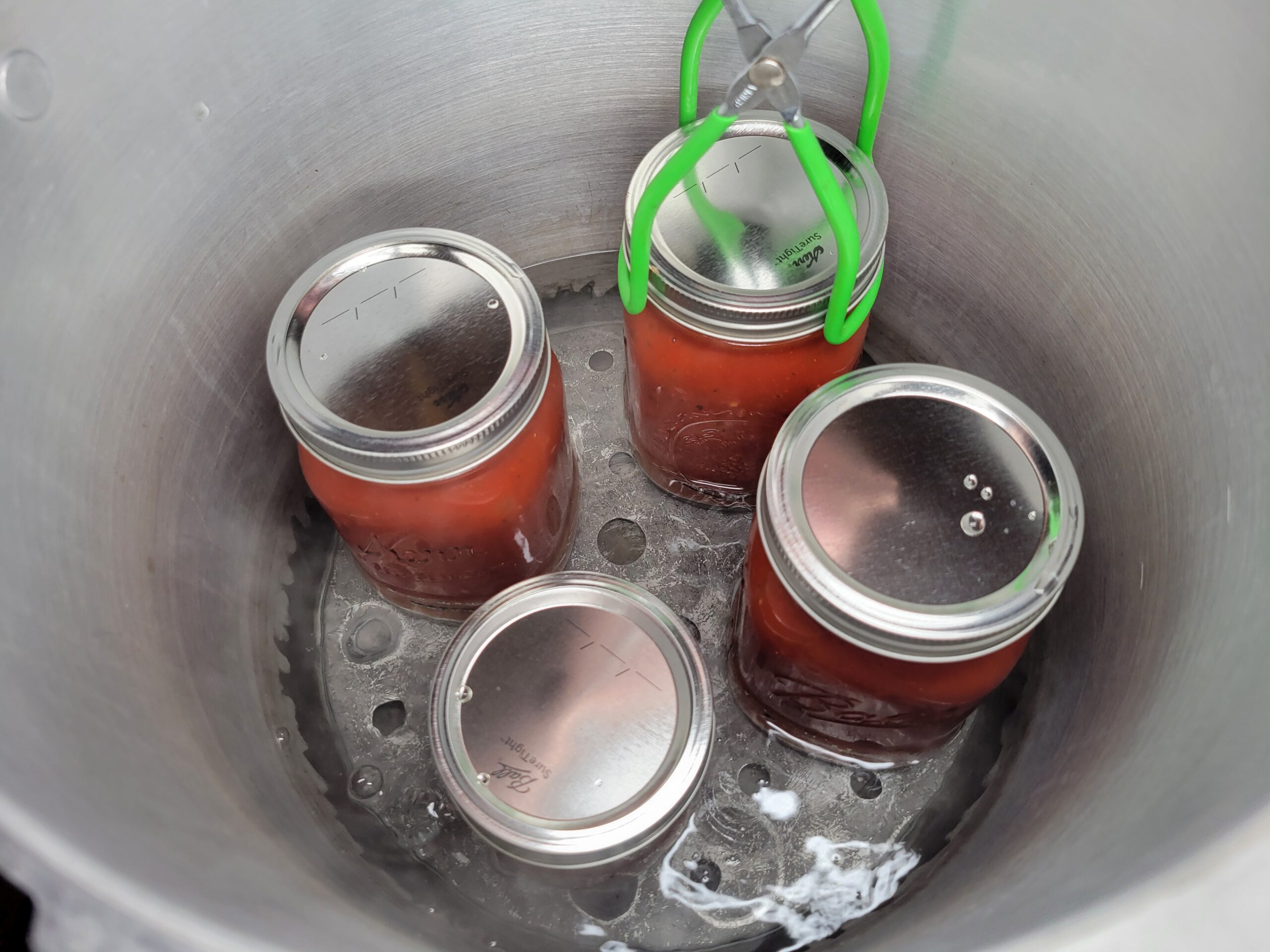
If the amount of water is not specified in your canner booklet from the manufacturer, use enough water so it is 2 to 3 inches high in the canner before you put the jars in. Carefully place the jars in the hot canner using a jar lifter, ensuring they are spaced evenly and not touching each other or the sides of the canner. The recommended processing time for spaghetti sauce with meat or meat broth is 60 minutes for 1/2-quart jars and 70 minutes for quart jars. Using a dial-gauge pressure canner, process the jars at 11 lbs pressure for altitudes from sea level to 2000 feet. For altitudes of 2001 to 4000 feet, use 12 lbs pressure; for 4001 to 6000 feet, use 13 lbs pressure; and for 6001 to 8000 feet, use 14 lbs pressure.
Turn the heat setting to its highest position. Heat until the water boils and steam flows freely in a funnel-shape from the open vent pipe or petcock. While maintaining the high heat setting, let the steam flow (exhaust) continuously for 10 minutes. After this venting, or exhausting, of the canner, place the counterweight or weighted gauge on the vent pipe, or close the petcock. The canner will pressurize during the next 3 to 10 minutes. Once the processing time is complete, turn off the heat, remove the canner from the heat if possible, and let it depressurize. After it has depressurized, remove the weight from the vent port. Wait 10 minutes, unfasten the lid, and carefully lift it away from you to avoid steam burns. Use a jar lifter to remove the jars, and place them on a towel with at least 1-inch spaces between them for cooling.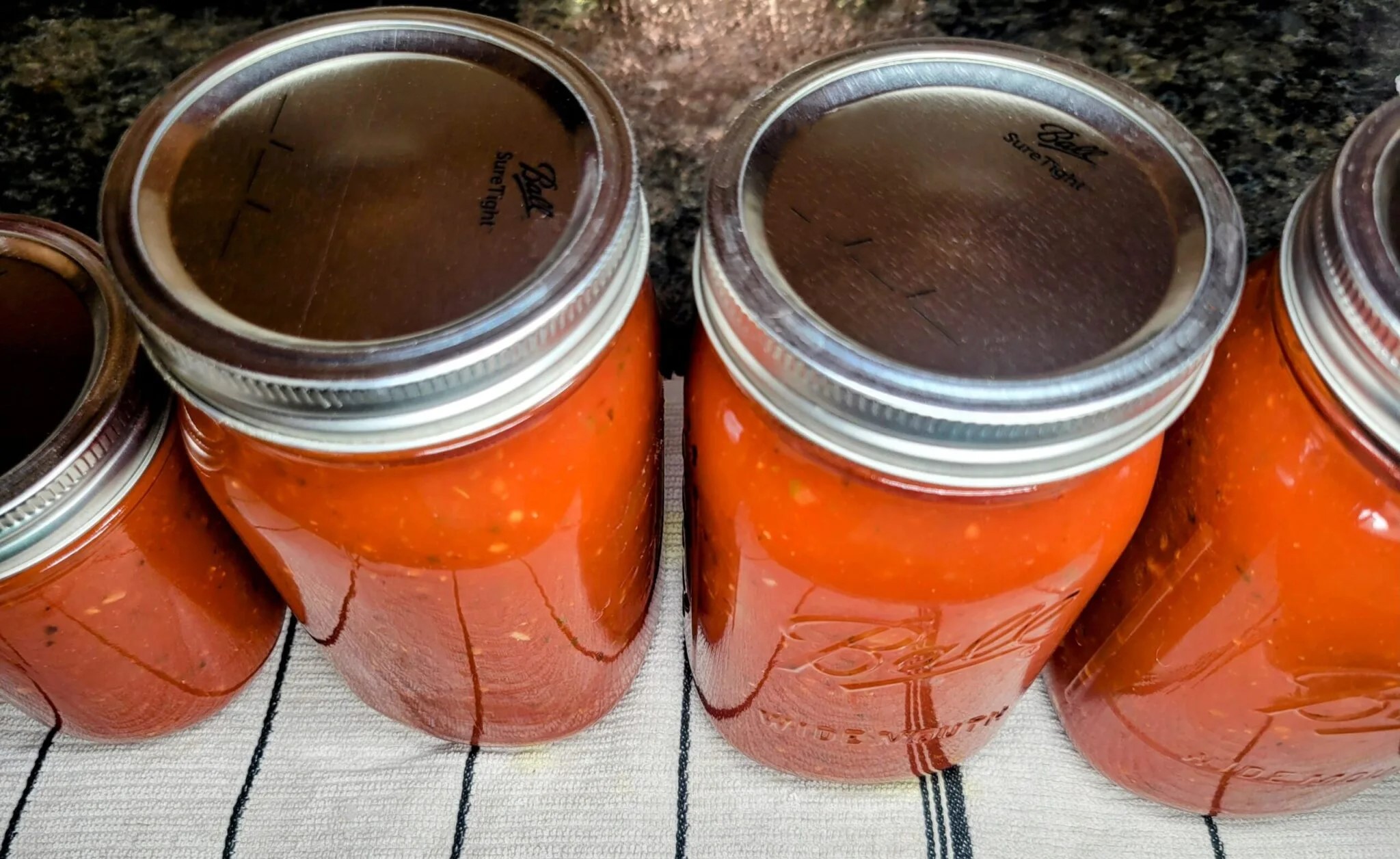
Let jars sit undisturbed to cool at room temperature for 12 to 24 hours. Inspect jars, remove rings, Check for proper lid seal, wipe off water spots and any residue. Date and label jars to store in a cool dry area for up to one year. For more information on pressure canning this is a great site: National Center of Home Preservation.
Enjoy!
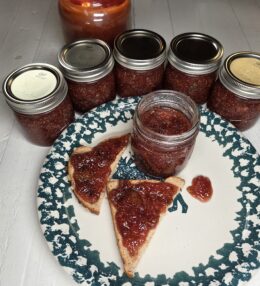
Don't miss my new recipes on: Tomato Herb Jam Recipe & Canning 🍅
Conclusion
Kitchen ToolsNeed some tools or ingredients to make this recipe? Use my Amazon Affiliate links to shop. I will make a small commission and it doesn't cost you any extra. Thank you for visiting.
Gardeners Basics, San Marzano Tomato Seeds Composite Wood Cutting Board 8 x 12 Professional Blender 950W Enameled Colander, 5 Quart 23-Quart Induction Compatible Pressure Canner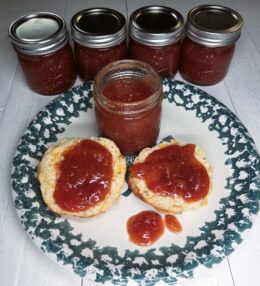

Leave a Review